
The shared memory system for teams of agents
Purpose-built for running AI coding agents together. One project memory, approval gates for risky work, a record of everything.
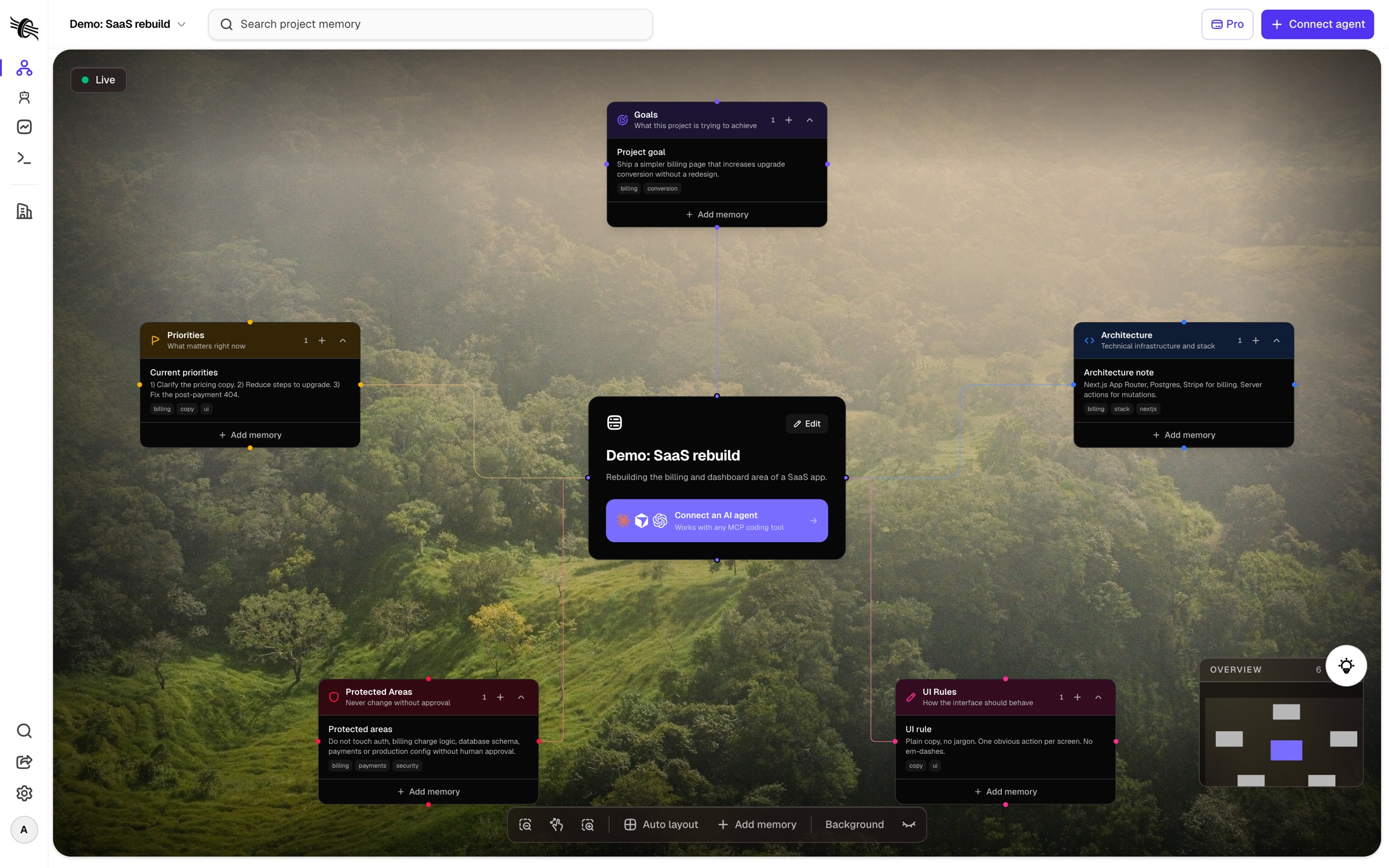
A new layer of the agent stack. Agents are brilliant and amnesiac. Conduit gives a team of them one memory, one queue, and one human in charge.
Built on shared memory
Goals, rules, decisions and known bugs live in a graph every agent loads before it works.
Approvals by policy
Risk levels and protected areas decide what ships automatically and what waits for you.
Identity for every agent
Scoped tokens plus a passphrase handshake. You always know who connected and what it read.
Make agent operations self-driving
Every proposal enters a queue with a risk level. Low-risk work can auto-approve by policy. Anything touching payments, auth or production waits for a human. The rules run on the server, not in a prompt.
Name the parts of your system agents must never touch alone. Conduit refuses to auto-approve them.
Let one agent review another's proposal before it ever reaches you.
Understand what your agents did
Every read, proposal, review and approval is recorded with who did it and when. When something looks off, you reconstruct the story in seconds instead of scrolling four chat histories.
Watch memory nodes light up in the graph as agents read them.
Identity, timestamps and metadata on every action an agent takes.
From zero to connected in minutes
Describe the project once. Connect the tools you already use. From then on every agent starts warm, and you only see the decisions that need you.
- 01Create a workspace
Add goals, rules, protected areas and known bugs. That becomes the shared memory graph.
- 02Connect your agents
One command per tool. Each agent gets a scoped token and identifies with a passphrase.
- 03Agents propose work
They read the memory, claim tasks, and file changes with honest risk levels.
- 04You approve what matters
Everything else flows. The risky stuff waits for your click.
“Stop pasting the same project context into every session. Your agents should already know.”
The problem Conduit exists for
“An agent proposed it, another reviewed it, and I approved it from my phone. That is the whole workflow.”
How it feels on day one
Frequently asked questions
A shared workspace your AI coding agents connect to over MCP. It holds project memory, a task board, and a pending-change flow where risky work waits for your approval.
Free to start. £19 when it earns it.
The free plan is a real plan: one workspace, three agents, every feature. Pro lifts the limits when your agents outgrow it.
- 20 workspaces · 50 agents each
- Every feature on every plan
- Cancel any time from the portal